Undeniable Proof of Synthetic Images and DeadZone
A forensic methodology for detecting manipulated CR2 files through 14-bit histogram analysis
1. Theoretical Foundation
The Physics of Sensor Noise
Every CMOS image sensor generates inherent electronic noise during capture. This noise is not a defect—it is a fundamental physical property of semiconductor electronics. In authentic RAW files, this noise appears as populated pixel values in the lower histogram bins (immediately above the optical black level).
Optical Black (OB) Pixels
What They Are: Optical Black pixels are physically masked photosites at the sensor periphery. Covered by an opaque metal shield, they receive no light and measure the sensor's baseline signal in complete darkness.
Calibration Function: OB pixels calibrate for:
- Dark Current — Thermally generated electrons independent of light exposure
- Read Noise — Electronic noise from analog-to-digital conversion
- Fixed Pattern Noise (FPN) — Manufacturing-induced pixel variations
- Bias/Offset Voltage — Baseline DC offset before digitization
In 14-bit Canon RAW files, the OB level centers around 1024. The region immediately above this (1024-1100) is populated by sensor noise in every authentic capture.
2. Baseline Establishment
Objective
Establish that CMOS sensor noise is hardware-inherent and independent of scene content by photographing worst-case subjects.
Methodology
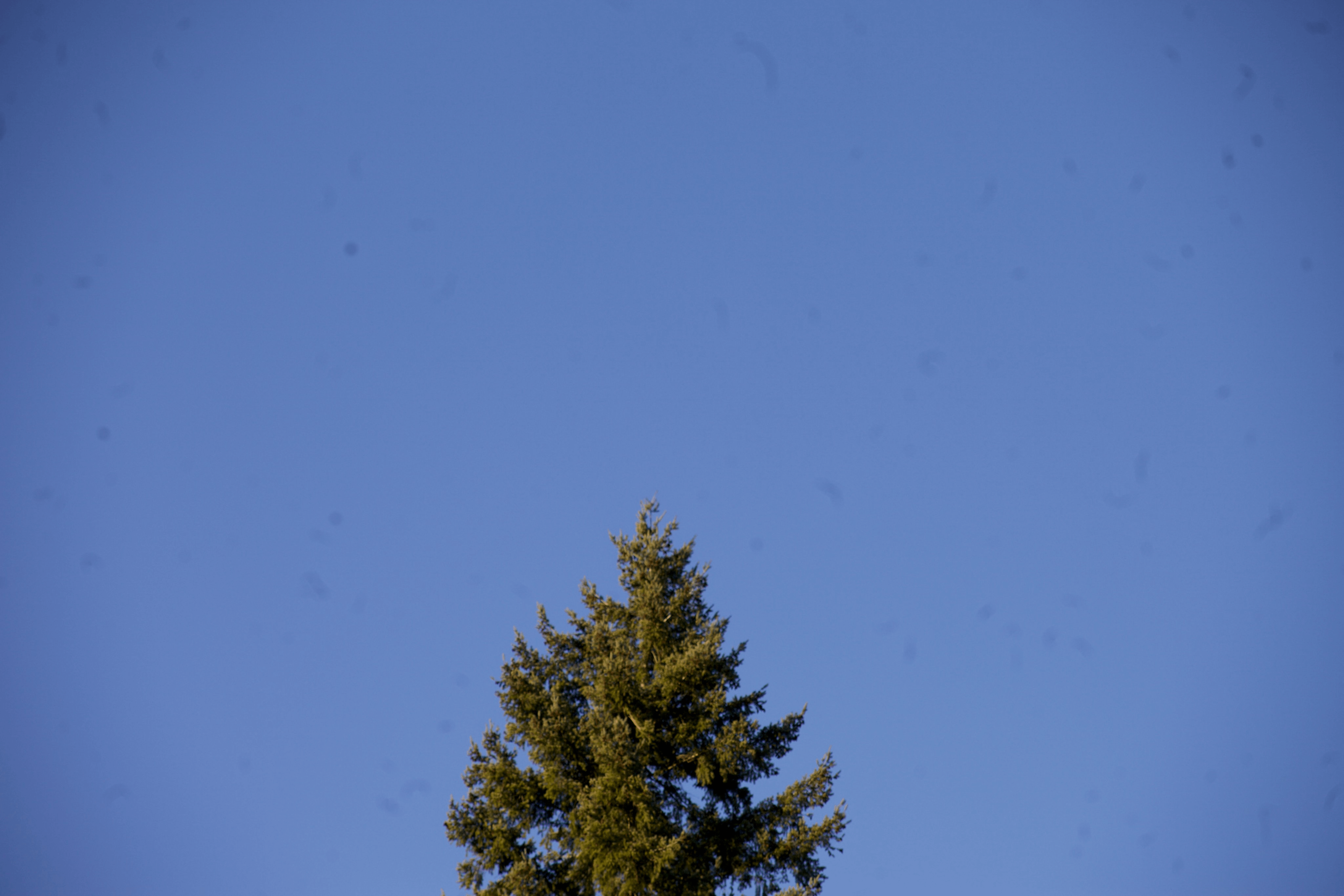
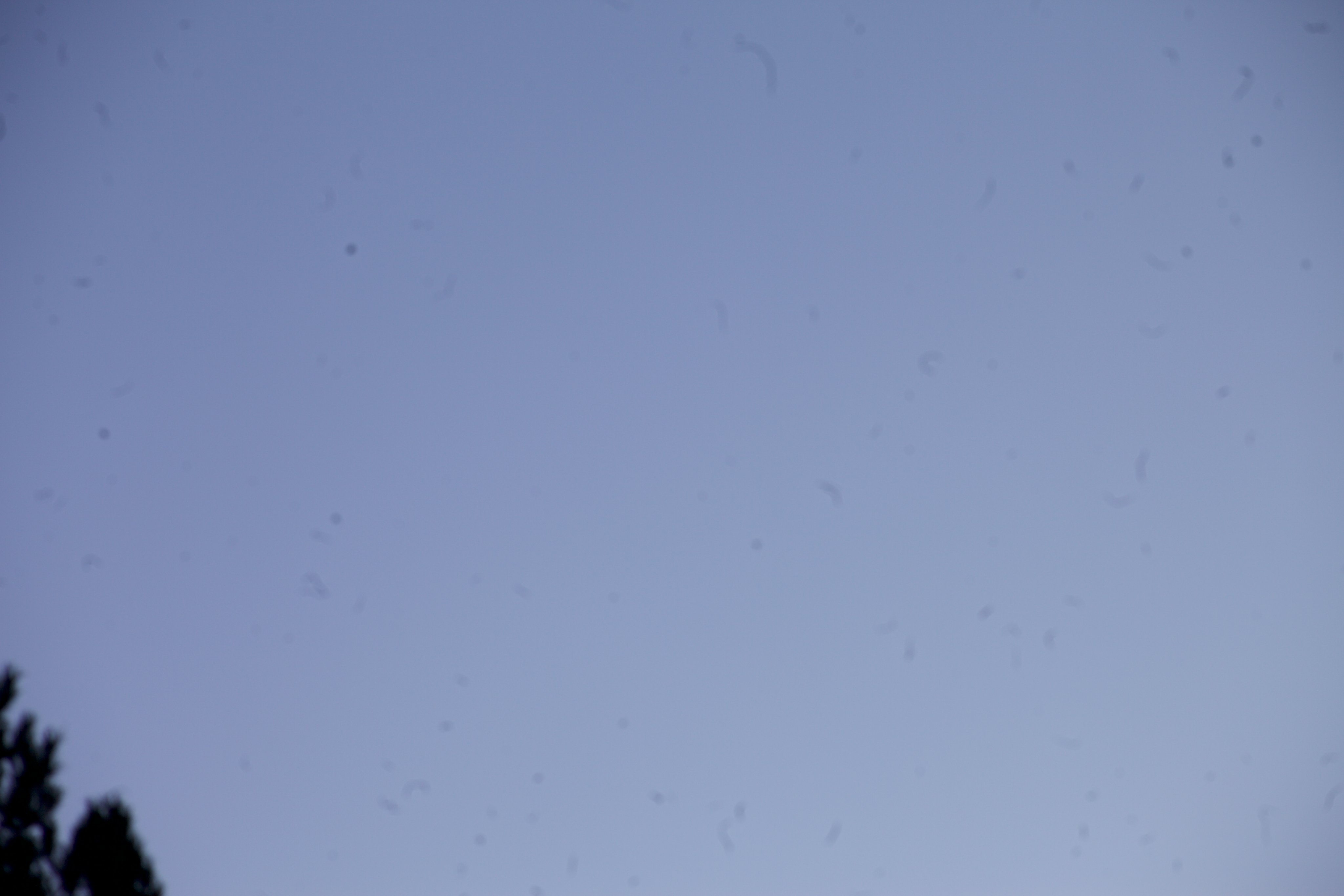
We captured images of featureless sky using a Canon 5D Mark II—the same camera model used in the Jonas images. A uniform sky minimizes scene-driven histogram variance, isolating the sensor's intrinsic noise behavior.
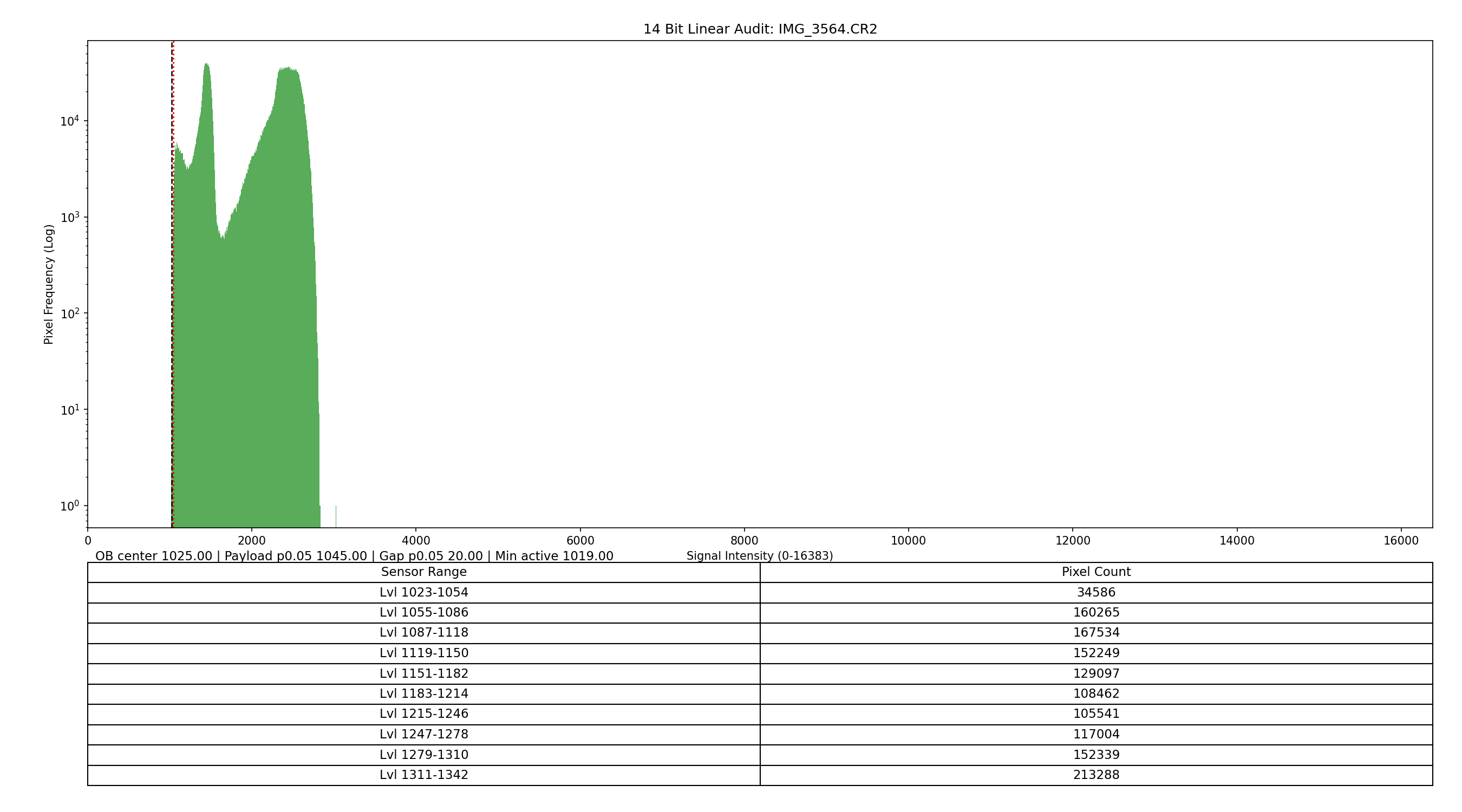
Baseline Set 1: IMG_3564.CR2
Plain sky with tree reference — Canon 5D Mark II
| Parameter | Value |
|---|---|
| OB Center | 1025 |
| Payload Start (p0.05) | 1045 |
| Gap | 20 levels |
| Lower Bin Population | Present |
| Verdict | Authentic |
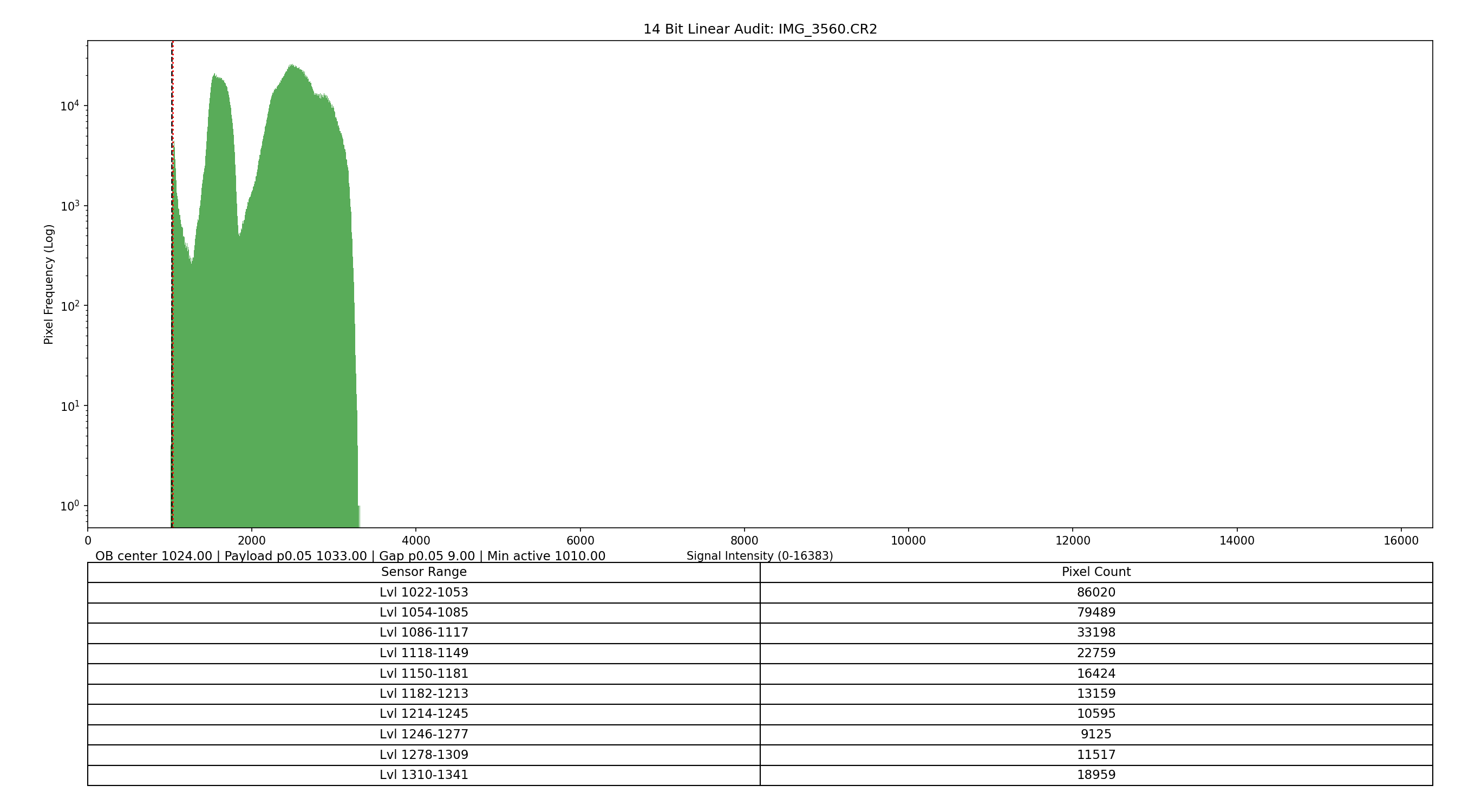
Baseline Set 2: IMG_3560.CR2
Featureless sky — Canon 5D Mark II
| Parameter | Value |
|---|---|
| OB Center | 1024 |
| Payload Start (p0.05) | 1033 |
| Gap | 9 levels |
| Lower Bin Population | Present |
| Verdict | Authentic |
3. Generating Synthetic CR2: The DeadZone Appears
Objective
Demonstrate that synthetic CR2 files—created by inserting external images—produce a detectable histogram anomaly: the missing noise floor (DeadZone).
Methodology
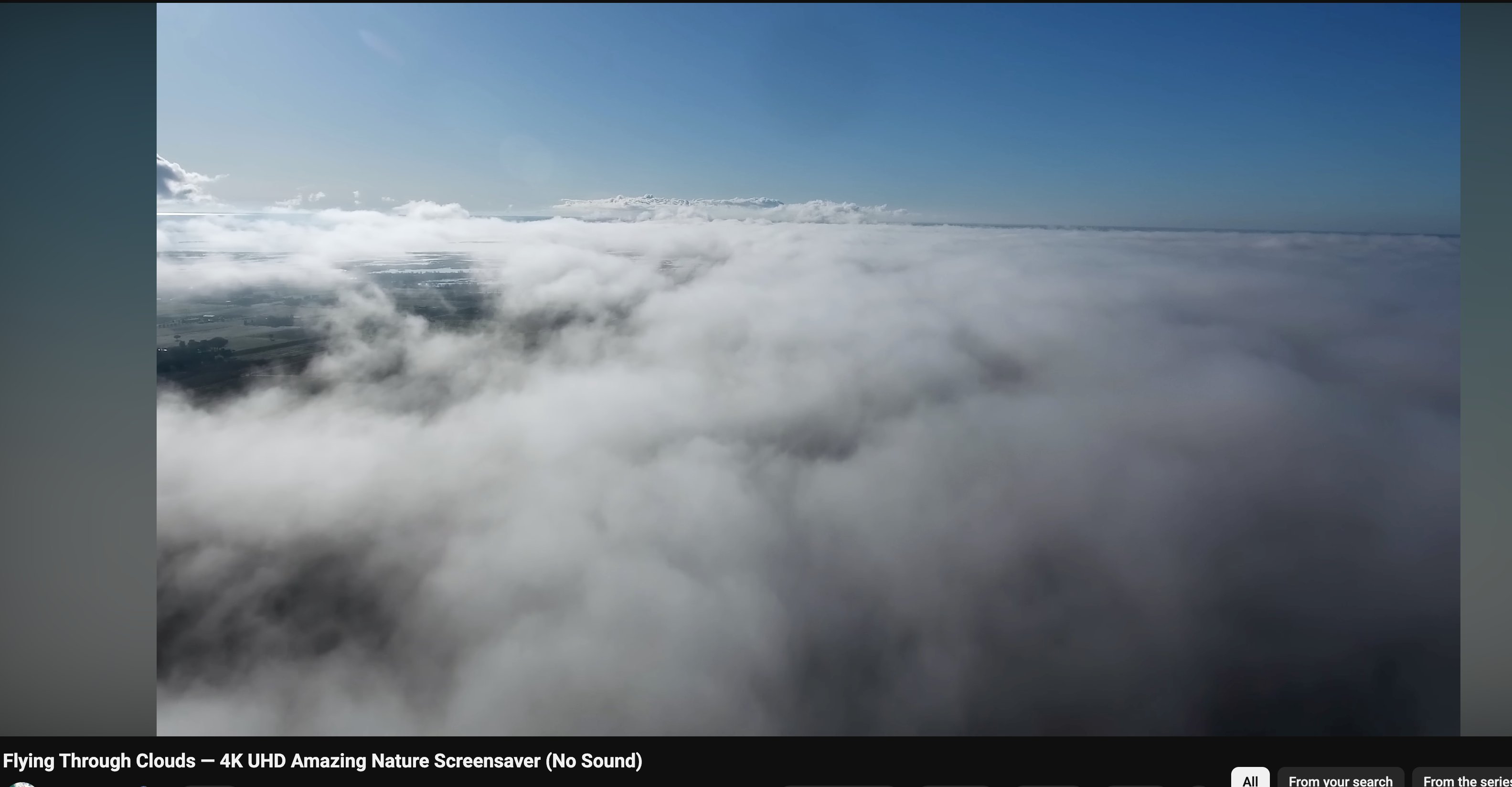
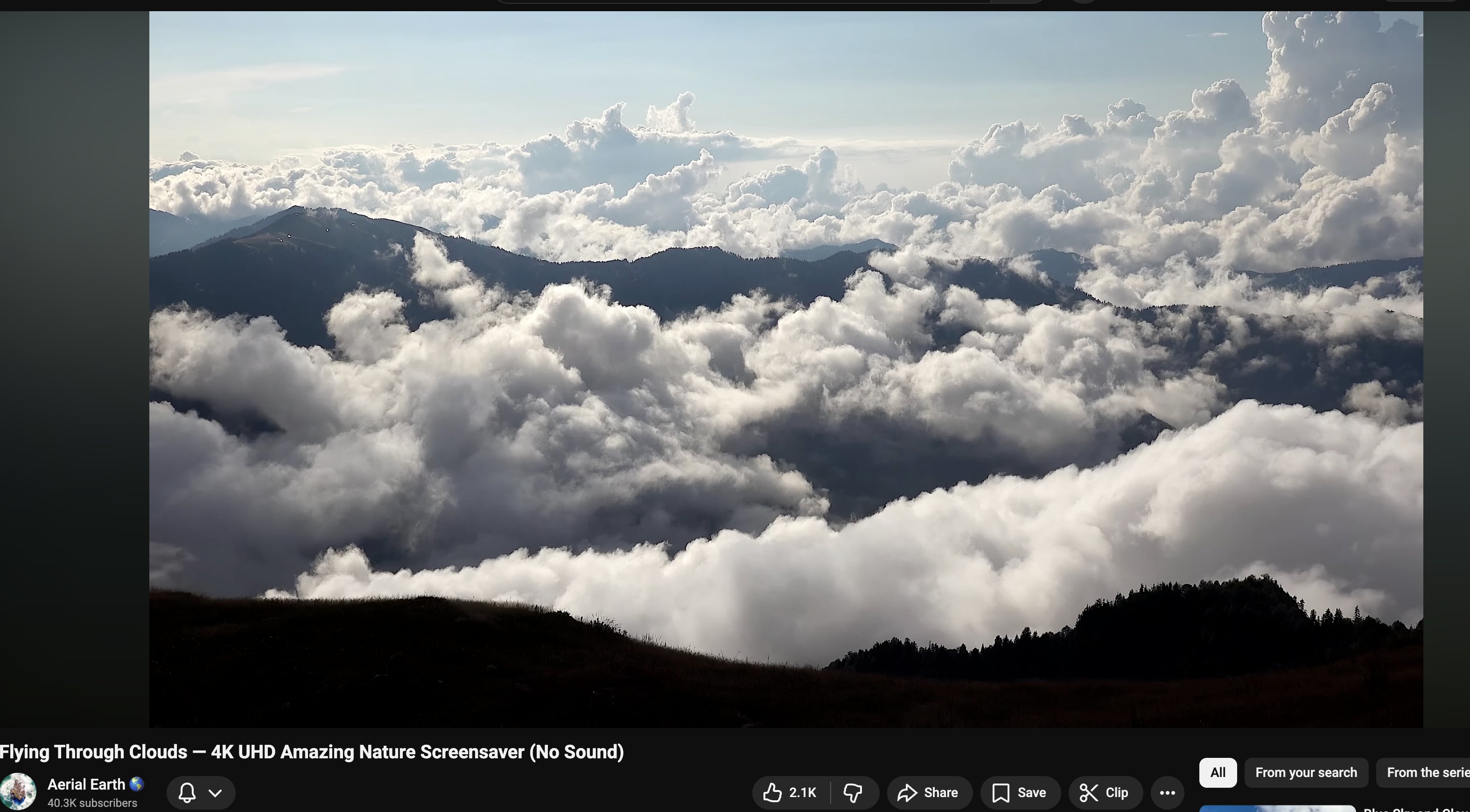
To replicate the methodology used in fraudulent image creation, we captured screenshots from a public YouTube channel ("Flying Through Clouds — 4K UHD Amazing Nature Screensaver" by Aerial Earth) and inserted them into CR2 container files using standard insertion techniques.
Synthetic Set 1: CL1.CR2
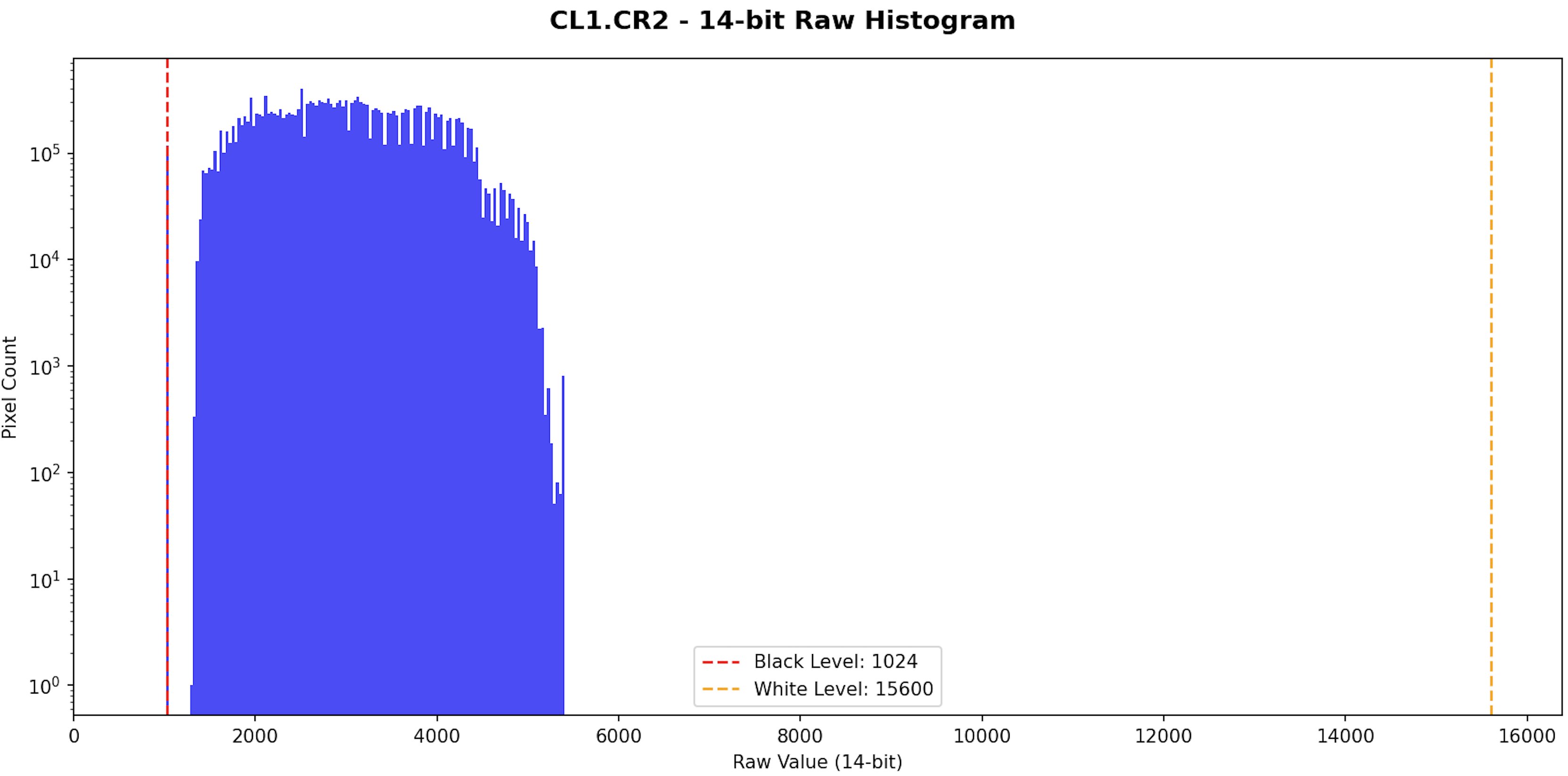
Source: YouTube screenshot — aerial clouds over fog
| Parameter | Value |
|---|---|
| Black Level | 1024 |
| Payload Start | ~1500 |
| Lower Bins (1024-1500) | Empty (DeadZone) |
| Verdict | Synthetic |
Synthetic Set 2: Cl.CR2
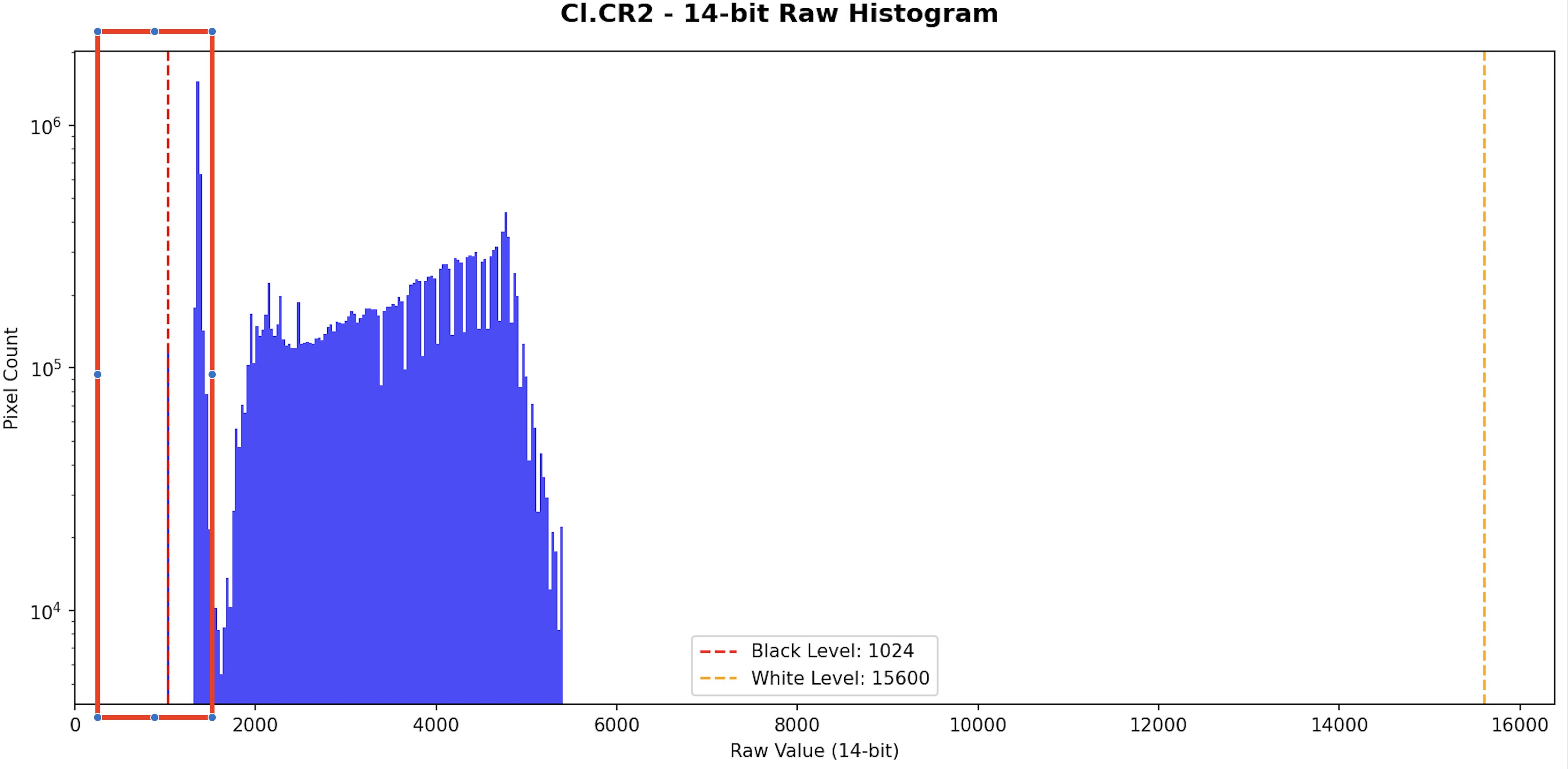
Source: YouTube screenshot — dramatic mountain clouds
| Parameter | Value |
|---|---|
| Black Level | 1024 |
| Payload Start | ~1500 |
| Lower Bins (1024-1500) | Empty (DeadZone) |
| Verdict | Synthetic |
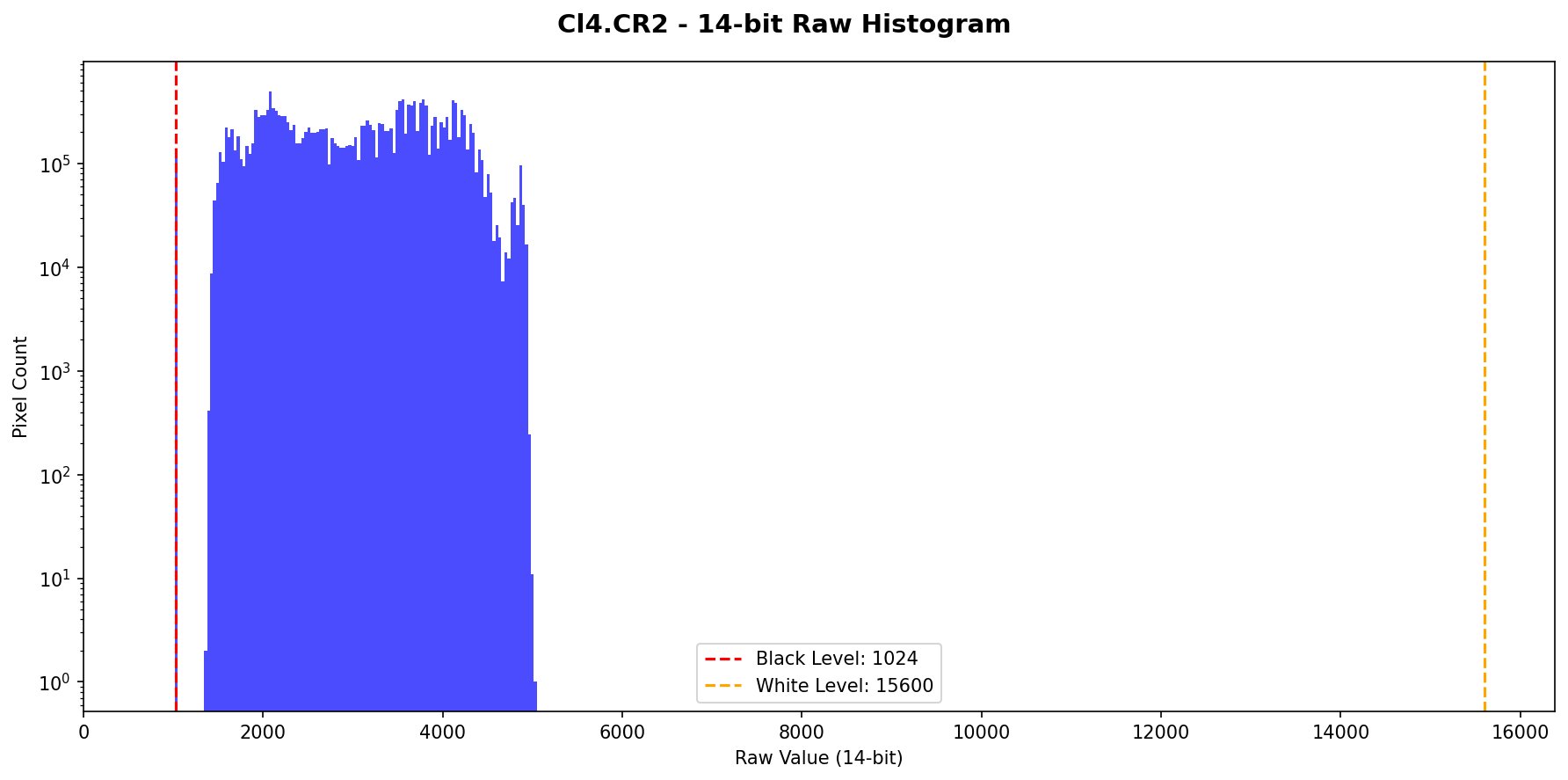
Synthetic Set 3: Cl4.CR2
Source: Aerial photograph — islands/coastline from airplane

| Parameter | Value |
|---|---|
| Black Level | 1024 |
| Payload Start | ~1500 |
| Lower Bins (1024-1500) | Empty (DeadZone) |
| Verdict | Synthetic |
4. The Ultimate Forgery Test
The Definitive Experiment
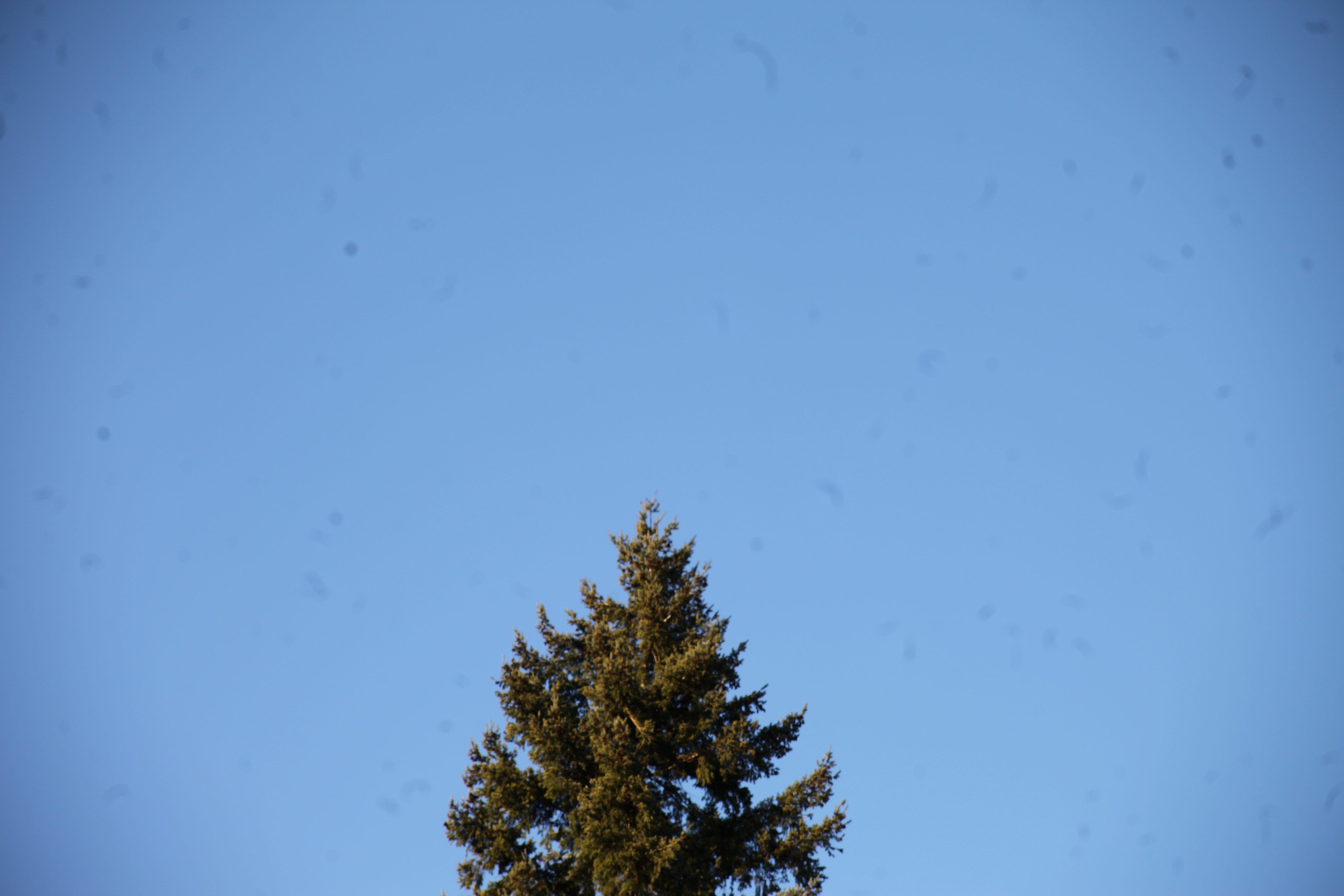
To conclusively validate our detection methodology, we performed the ultimate test: taking a pristine, authentic CR2 file with no histogram gap, extracting its own embedded JPEG preview, and re-inserting that preview back into the CR2 container.
Hypothesis: If the DeadZone is a reliable indicator of synthetic manipulation, it must appear even when using image data derived from the original authentic capture itself.
Methodology
- Source File: IMG_3564.CR2 — Pristine original with confirmed populated lower bins
- Extraction: Embedded JPEG preview extracted from the CR2 container
- Re-Insertion: Extracted JPEG inserted back into CR2 using standard techniques
- Analysis: 14-bit linear histogram examined for noise floor characteristics
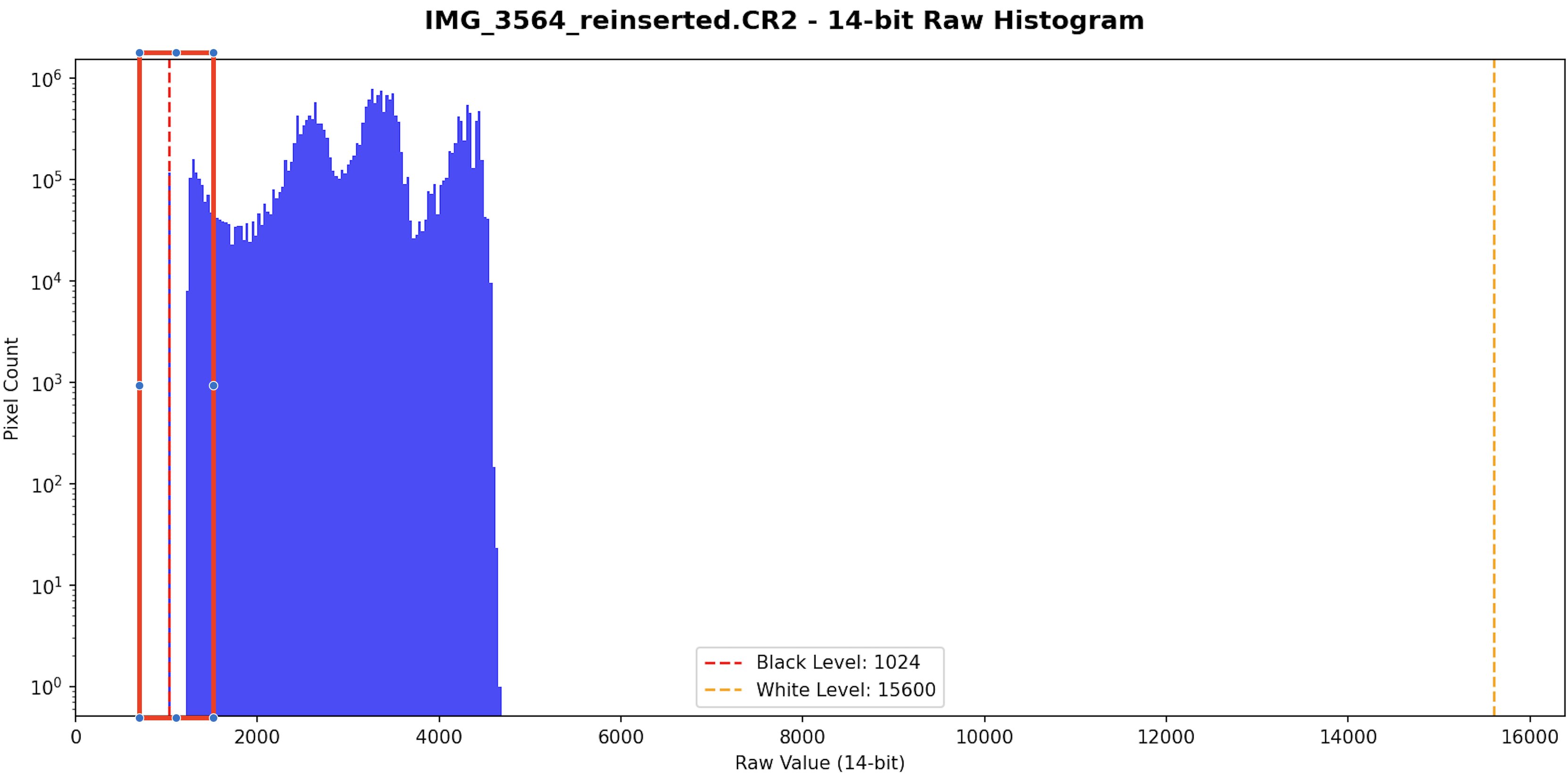
Result: IMG_3564_reinserted.CR2
| Parameter | Original | Re-Inserted |
|---|---|---|
| Lower Bins (1024-1100) | Populated | Empty |
| Noise Floor | Present | Absent |
| Gap | None | ~500 levels |
| Verdict | Authentic | Synthetic |
Why the DeadZone Appears
The gap appears despite using the same scene from the same camera at the same moment. The JPEG encoding pipeline permanently destroys sensor-level data:
- Demosaicing interpolates RAW Bayer data into RGB
- White balance and tone curves remap intensity values
- Lossy compression quantizes and discards sub-threshold information
- 8-bit encoding truncates 14-bit precision
When re-inserted, the processed 8-bit JPEG values are scaled back to 14-bit space, but the original sensor noise cannot be reconstructed. The result is a "clean" signal with an abrupt start—the unmistakable fingerprint of synthetic origin.
5. Summary of Evidence
| File | Type | Lower Bins | DeadZone | Verdict |
|---|---|---|---|---|
| IMG_3564.CR2 | Baseline | Populated | No | Authentic |
| IMG_3560.CR2 | Baseline | Populated | No | Authentic |
| CL1.CR2 | Synthetic | Empty | Yes | Manipulated |
| Cl.CR2 | Synthetic | Empty | Yes | Manipulated |
| Cl4.CR2 | Synthetic | Empty | Yes | Manipulated |
| IMG_3564_reinserted.CR2 | Re-inserted | Empty | Yes | Manipulated |
6. Conclusion
This research establishes undeniable proof that synthetic CR2 files can be reliably detected through histogram analysis:
- Authentic CR2 files always exhibit populated lower bins due to inherent sensor noise
- Synthetic CR2 files consistently show the DeadZone regardless of source material
- Even re-inserted original data produces the synthetic fingerprint
- The DeadZone is unavoidable for any insertion-based manipulation
The absence of sensor noise in lower histogram bins is a physical impossibility for authentic CMOS sensor captures. This makes the DeadZone an irrefutable forensic indicator of image manipulation that cannot be circumvented without access to original sensor data.